Nonogram vs Picross vs Griddlers vs Hanjie: One Puzzle, Many Names
Four names, one puzzle. Here is why the same grid goes by so many titles — and which one we use at the atelier.
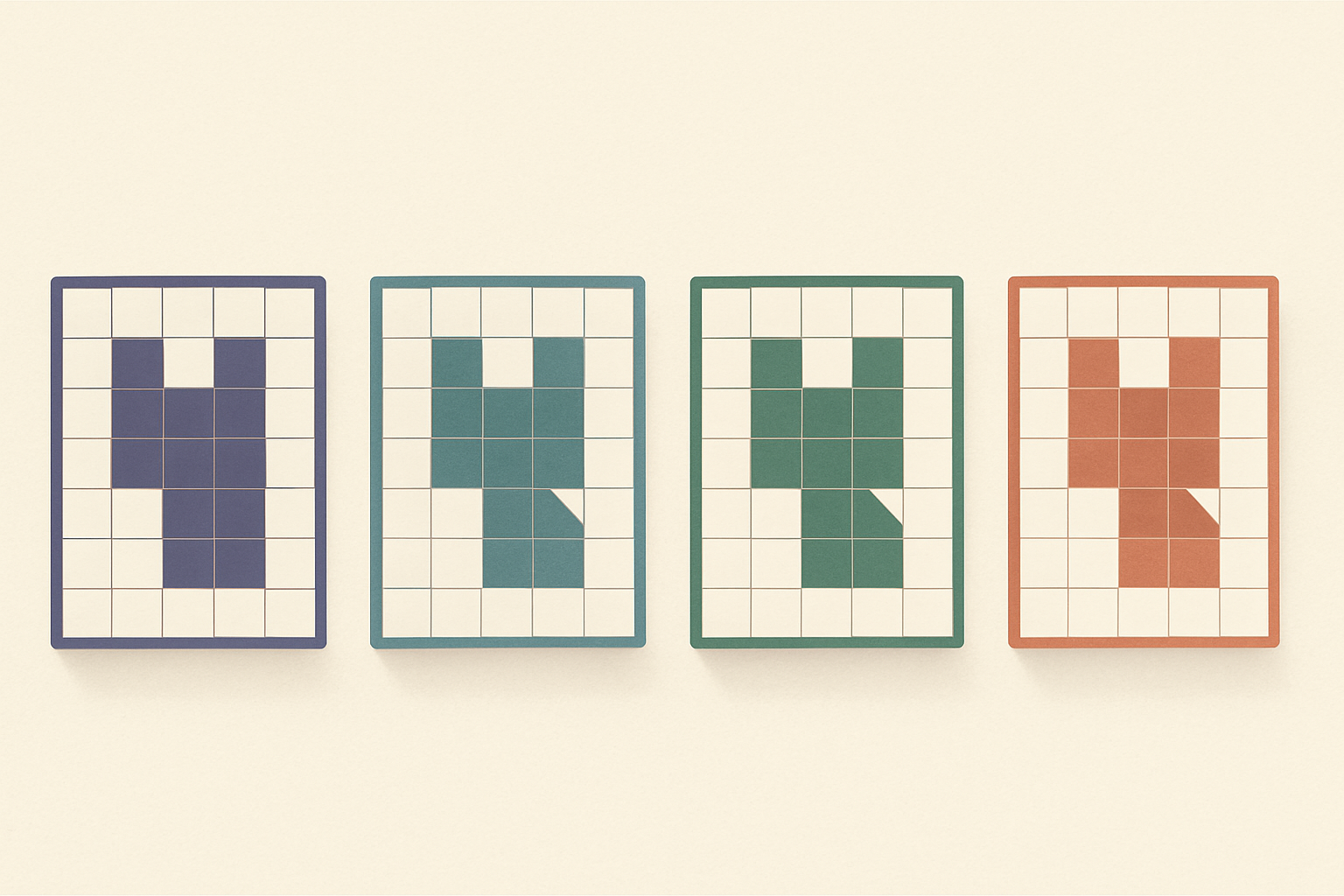
The short answer: nonogram, Picross, Griddlers and Hanjie are all the same puzzle. The name changes with the country, the publisher, or the video game you first met it in — but the logic never does. Learn to solve one and you can solve all of them.
We publish nonogram books for a living, and this is comfortably the question we hear most. So here is the clear, complete answer: where each name comes from, why there are so many, and the one we use at the atelier.
Why does one puzzle have so many names?
The puzzle has no single inventor. In the late 1980s the idea appeared in Japan — Non Ishida is the name most often credited — and spread through Japanese puzzle magazines before crossing to the United Kingdom. With no central owner and no trademark to unify it, every magazine, publisher and games studio that picked it up simply gave it a new name. That is the whole reason the list is so long: it is not several puzzles, it is one puzzle wearing a lot of hats.
The names, one by one
Nonogram
The most neutral, international name — and the closest the puzzle has to an official one. It nods to Non Ishida, one of its originators. When you want to talk about the puzzle itself rather than a particular product, nonogram is the word that travels best.
Picross
Short for “picture crossword,” and almost certainly the name most people meet first. Nintendo turned it into the long-running Picross video-game series, and for a whole generation of players the puzzle simply is Picross — a brand name that became a household word.
Griddlers
A blend of “grid” and “riddle,” Griddlers is a trademarked name used heavily in British and European puzzle books and magazines. Same rules, same satisfaction — just the label a particular publishing tradition settled on.
Hanjie
The name that carries the puzzle’s Japanese roots most directly. You will find it in UK newspapers and puzzle collections, sitting alongside sudoku and kakuro as part of the same wave of Japanese logic puzzles.
…and a few more
The list does not stop there. Depending on where you look you will also see Japanese Crosswords, Paint by Numbers, Pic-a-Pix, Picto and Crucipixel. All the same puzzle. All solved in exactly the same way.
What never changes: the rules
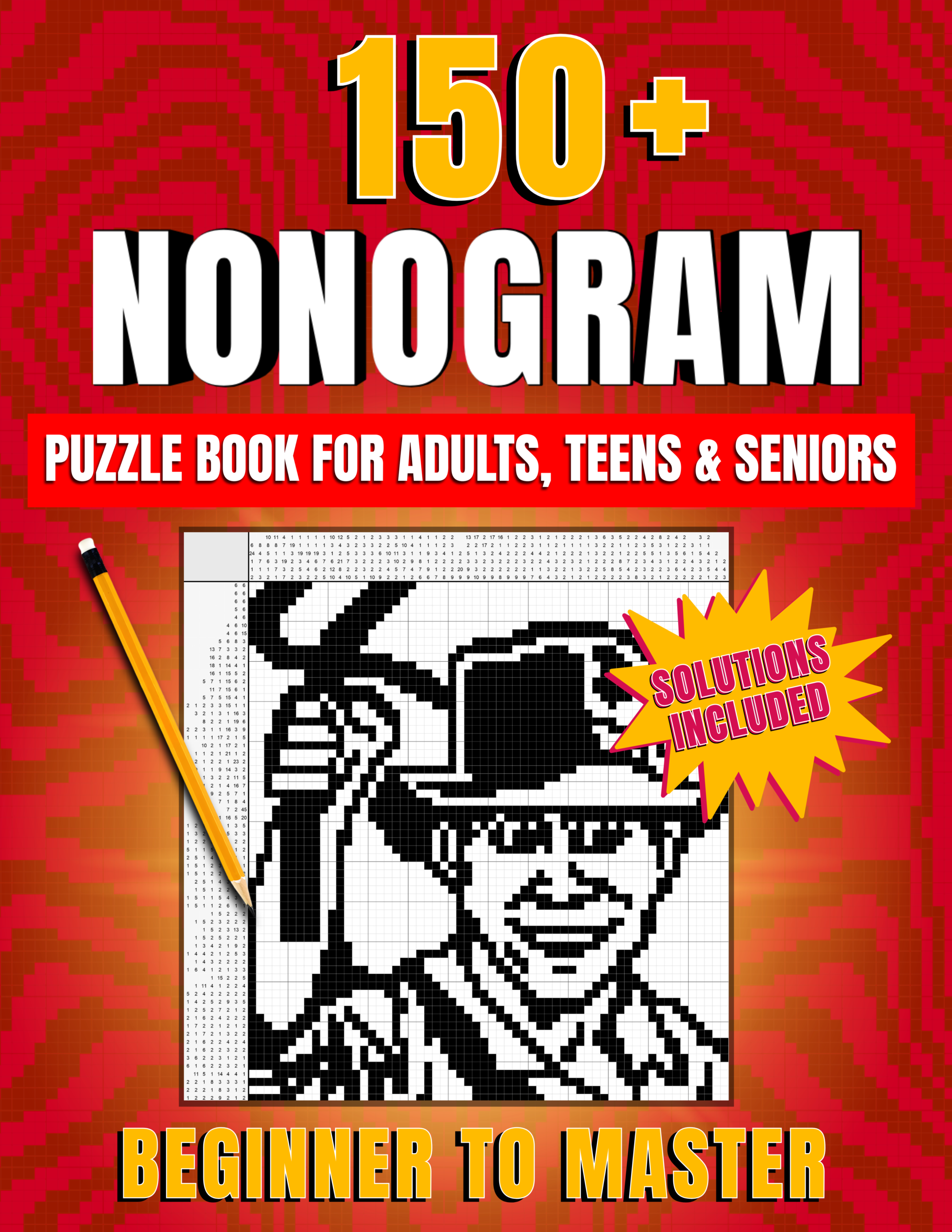
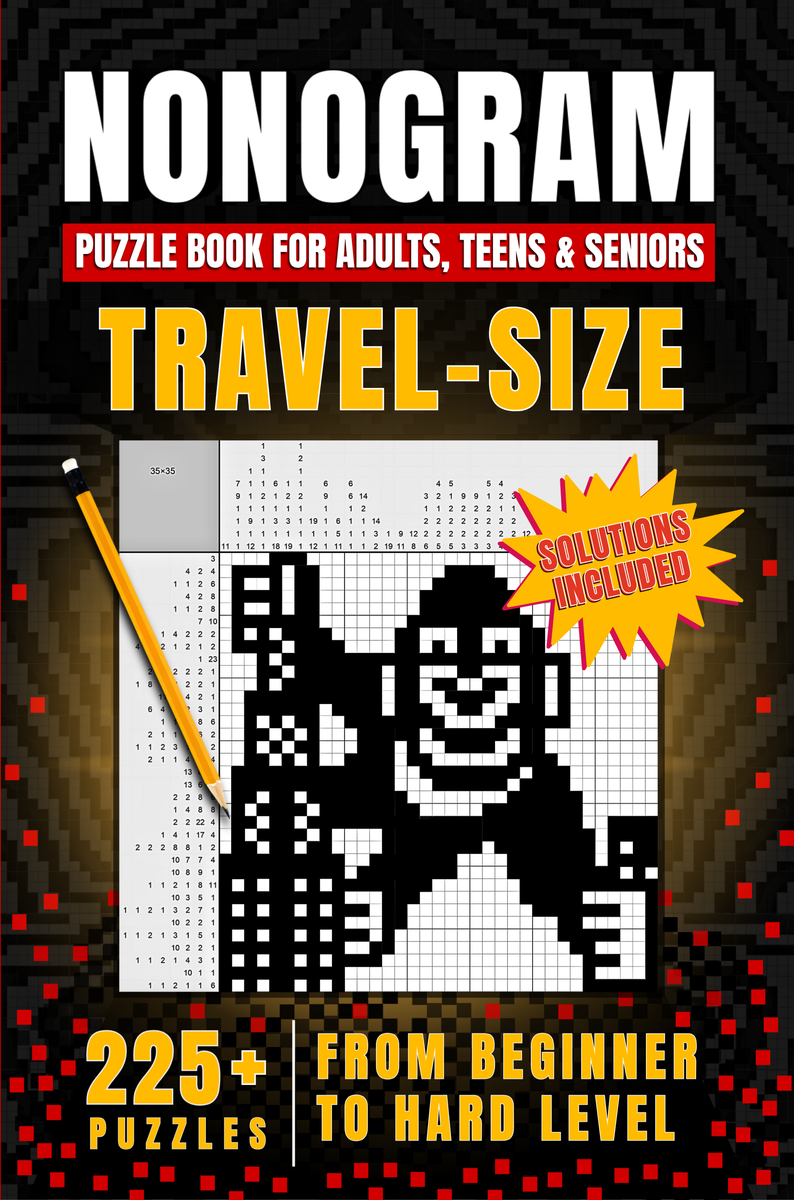
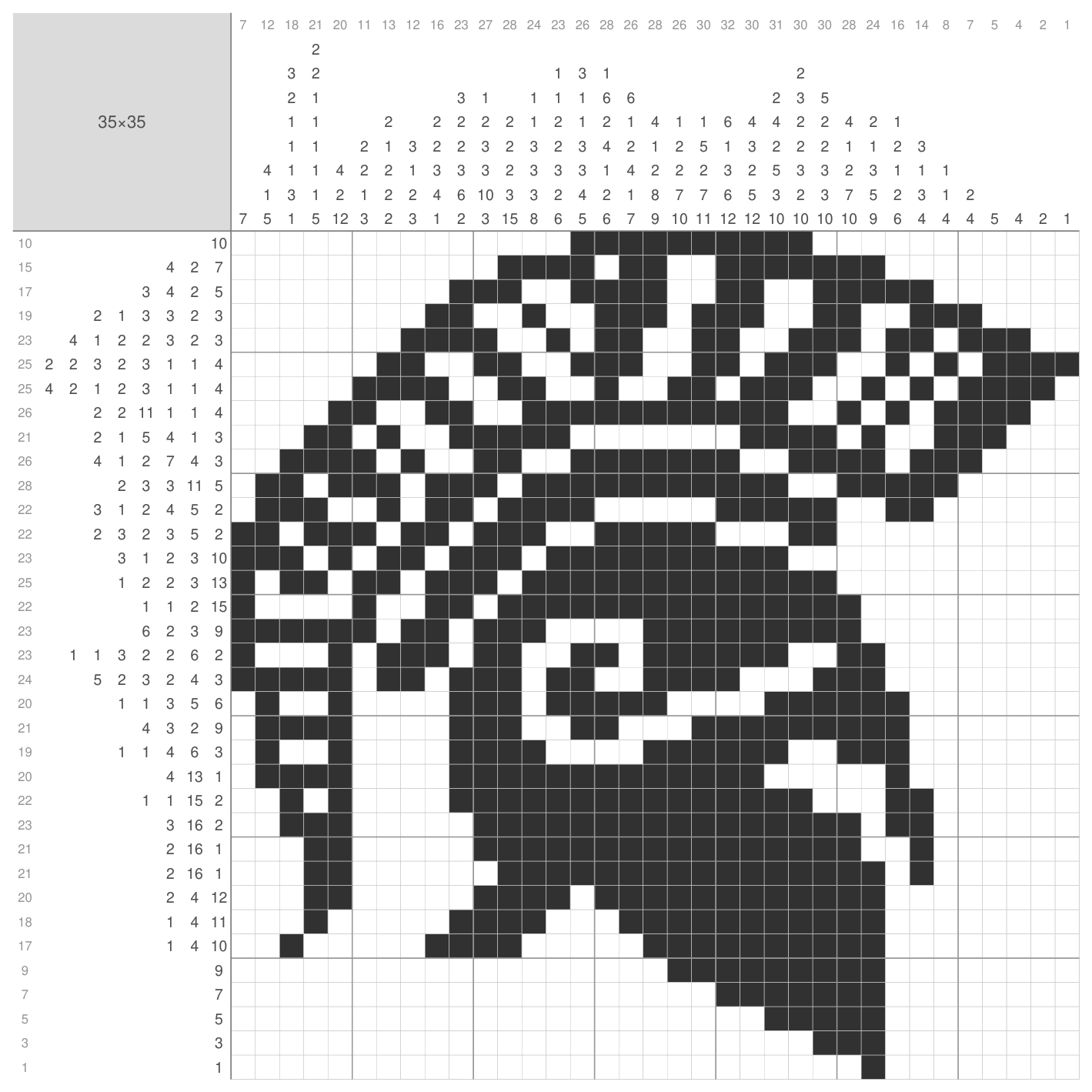
Whatever it is called, the mechanics are identical. You have a grid, with numbers running along the top and down the left edge. Those numbers tell you how many cells to fill in each row and column, and in what order. By working out where the filled runs must overlap, a hidden picture slowly appears. It is deduction, not guesswork — every square has a reason.
If you are new to it, our guide to what a nonogram is walks through the idea from scratch, and our step-by-step solving guide covers the overlap method and the five mistakes every beginner makes.
So which name should you use?
Use whichever one your audience knows. If you grew up on a Nintendo handheld, “Picross” will always feel right. If you buy British puzzle magazines, “Griddlers” or “Hanjie” will be second nature.
At The Logic Atelier we say nonogram, deliberately. It is the neutral, international term, it honours the puzzle’s origin, and it keeps the focus on the puzzle itself rather than on any one company’s version of it. When we design a book, we are not making a branded product; we are making the puzzle, as well as we can.
Same grid. Same quiet, satisfying logic. Whatever you call it, there is a book of them waiting for you.
Frequently asked
Are Picross and nonograms exactly the same?
Yes. Picross is Nintendo’s brand name for nonograms; the rules are identical.
Is Hanjie harder than a nonogram?
No — Hanjie is simply another name for the same puzzle. Difficulty depends on the grid size and design, not the name.
Is there a “correct” name?
There is no official one, but “nonogram” is the most neutral and widely understood term.
The Logic Atelier publishes the books featured on this site. Some links lead to Amazon, where our titles are sold.

Maximiliano Leyton Gaggioli
Founder, editor and designer of The Logic Atelier. Trained as an architect, he designs the grids, tests every puzzle, draws the pixel art and answers the mail — the atelier is small on purpose.
More about the editorial →
One letter a month. Worth opening.
Every new article, puzzle techniques and atelier notes — straight to your inbox.