
Learn · Nonograms The Japanese logic puzzle, explained

What is a nonogram?

A nonogram is a picture logic puzzle where numbers slowly become an image. No guessing, no luck — just you and the logic. Here is everything you need to start.

Get a free sample

What a nonogram is (and what makes it different)

A nonogram — also called Picross, Hanjie or a Japanese crossword — is a grid puzzle. The numbers along each row and column tell you how many cells to fill, and in what order. Fill them correctly and a hidden picture appears, one logical step at a time.

Unlike a crossword, you need no vocabulary and no trivia. Everything you need is already in the grid. It is pure deduction: every move can be reasoned, and a well-made puzzle is always solvable without guessing.

Also known as: picross, hanjie, griddlers and Japanese crosswords

Wherever you meet them, nonograms wear many names. Nintendo popularised them as Picross ("picture crossword"). In the United Kingdom they are often called Hanjie or Griddlers; elsewhere you may see Pic-a-Pix, Paint by Numbers or simply Japanese crosswords.

Nonogram vs picross vs hanjie: are they the same?

Yes — they are the same puzzle. "Picross" is Nintendo's trademarked name, "Hanjie" is common in British puzzle magazines, and "nonogram" is the neutral term used worldwide. The rules never change.

How a nonogram works: reading the clues

What the numbers mean

A clue like 3 1 2 means: a block of three filled cells, then at least one gap, then a block of one, another gap, and finally a block of two — always in that order. The empty cells between blocks matter as much as the filled ones.

Nonogram rules in one minute

Fill cells so every row and column clue is satisfied at the same time. Blocks always keep their order. There is exactly one solution, and you can always reach it by logic alone — never by guessing.

A solved example, step by step

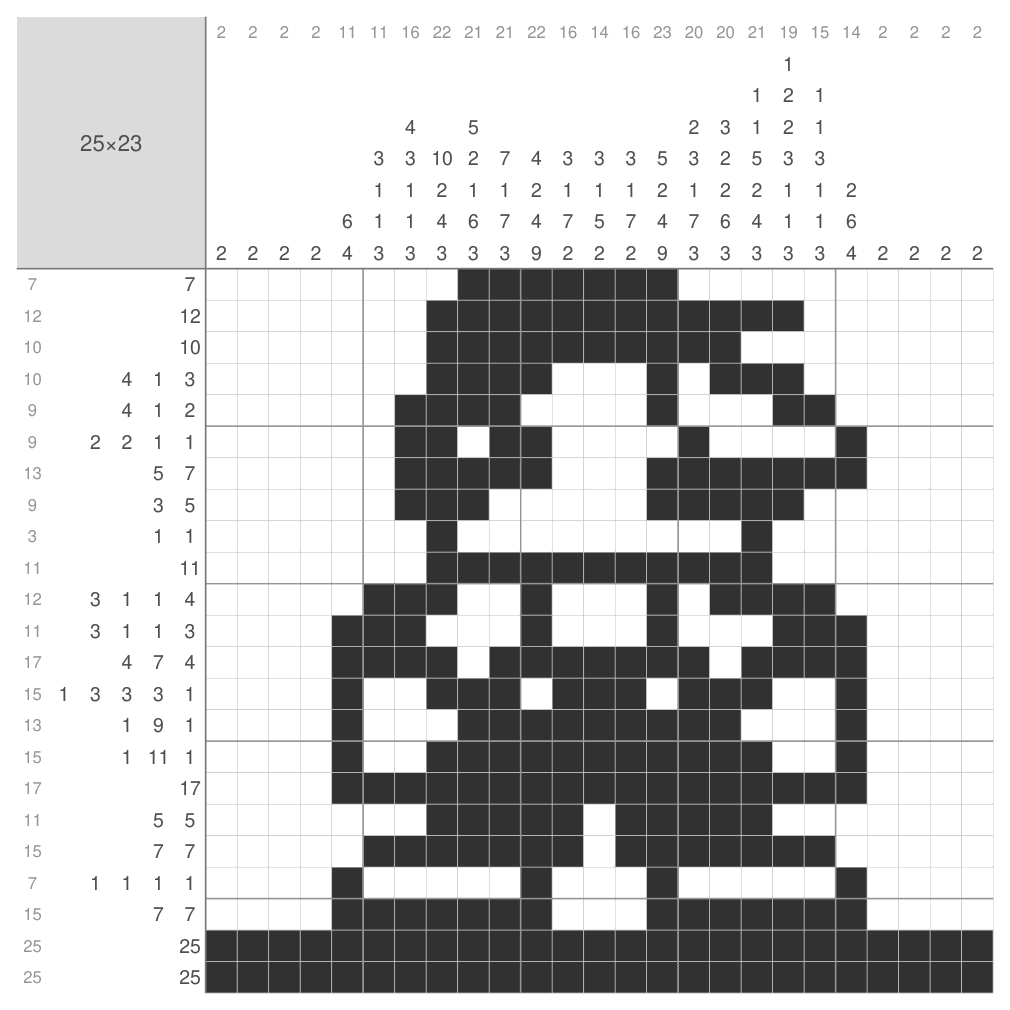
The best way to understand a nonogram is to watch one come to life. Begin with the rows and columns whose clues almost fill the line. Mark what must be filled, cross out what cannot be, and let each deduction unlock the next — until the hidden picture quietly reveals itself, like this pixel-art reveal from our books.
Follow the full beginner's guide →

Solved nonogram pixel art example from The Logic Atelier

How to solve a nonogram: beginner techniques

Start with the biggest clues

Large numbers leave little room to move, so they reveal filled cells first. In a row of ten, a clue of eight must overlap in the middle no matter where it sits — so those middle cells are always filled.

The overlap method

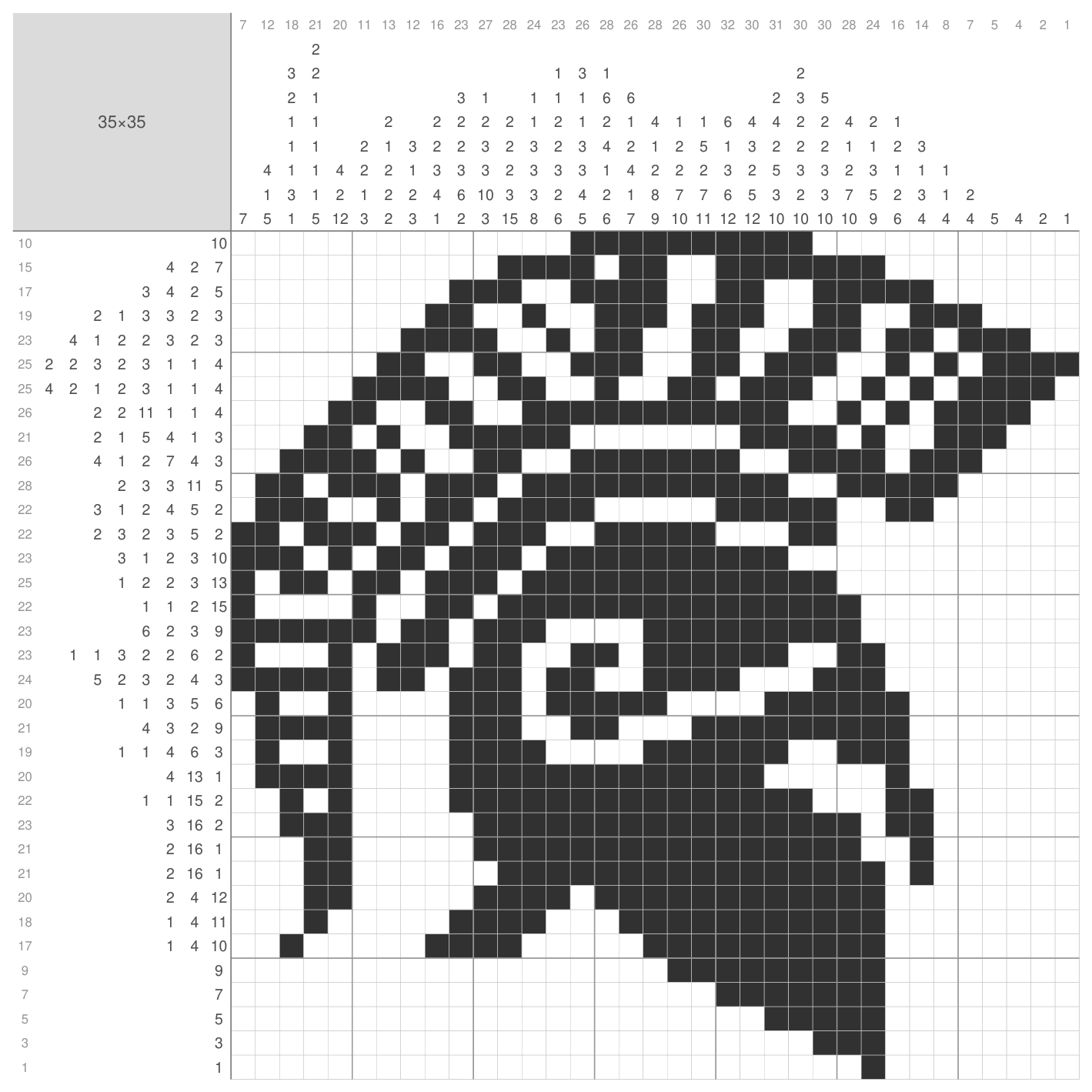
Imagine sliding a block as far left as it goes, then as far right. Any cell covered in both positions is certainly filled. This single trick unlocks most beginner puzzles.
Read the full solving guide →

Nonogram solving techniques illustrated with pixel art

Where nonograms come from: a short history

In 1987, Japanese graphic editor Non Ishida created grid pictures using building windows lit on or off — and won a design competition in Tokyo. The name "nonogram" blends her name with "diagram". In 1995 Nintendo brought the puzzle to millions under the name Picross, and today nonograms are enjoyed worldwide, on paper and on screens alike.

Read the full history in our journal →

Why nonograms are good for your mind

A nonogram asks for calm, focused attention — the kind that quiets a busy mind. There is no timer, no opponent, only the steady pleasure of logic clicking into place. For many readers it becomes a daily ritual: a few minutes to breathe, think clearly, and watch order emerge from numbers. At The Logic Atelier, that is exactly what we build for — and the science behind it is worth knowing.

Try it free

A nonogram sample from the atelier.

Fifteen hand-curated puzzles — the same craft and quality you will find in our books — plus our monthly Logic Letter.

✓  Check your inbox — your free sample is on its way.
Quick answers

Frequently asked questions

Are nonograms hard to learn?

Not at all. The rules take a minute to grasp; the depth comes later. Our books begin with gentle 10×10 grids and build gradually to expert 60×70 challenges, so there is a comfortable starting point for everyone.

Do I need to be good at maths?

No. Nonograms use counting, not calculation. If you can count to ten, you can solve one. It is logic and patience, not mathematics.

Can every nonogram be solved without guessing?

A well-made nonogram always has a single solution reachable by pure logic. Every puzzle we publish is checked to be solvable step by step — no guessing, ever.

From learning to solving

Explore our nonogram books.

From relaxing beginner grids to master-level challenges — each puzzle hand-curated, each book crafted as an object to keep.

See the collection