
Can puzzles slow cognitive decline? What the science says
The honest answer, backed by a Columbia-Duke trial: puzzles are linked to slower decline – but they are a habit, not a cure.

The honest answer is a careful yes. Puzzles won’t cure or prevent dementia — anyone who tells you otherwise is selling something. But the best evidence we have suggests that regular, genuinely challenging puzzles are linked to a slower slide in memory and thinking, especially for people who already feel their sharpness fading. They are a habit worth keeping, not a magic pill.
We publish logic puzzles for a living, so we have every reason to overstate this. We would rather tell you what the science actually shows.
The strongest study: crosswords beat brain-training games
The most rigorous evidence comes from a randomized controlled trial published in NEJM Evidence by researchers at Columbia and Duke. They took older adults (average age around 71) with mild cognitive impairment — the stage that sometimes precedes dementia — and split them into two groups. One trained on web-based crossword puzzles; the other on cognitive video games marketed for “brain training.”
The crossword group did better. On the trial’s main cognitive measure, the ADAS-Cog, they showed greater improvement at both 12 weeks and 78 weeks. They also had less brain shrinkage on imaging and better day-to-day functioning. That last part matters: it is one thing to score higher on a test, another to manage your own life more easily. The plain, old-fashioned word puzzle outperformed the shiny app built to train brains.
The nuance most headlines skip
A separate line of research — large observational studies that follow people for years — adds an important wrinkle. One found that people who did crossword puzzles delayed the onset of accelerated memory decline by roughly two and a half years. That is a meaningful stretch of good years.
But the same research found something sobering: once decline did begin, the puzzle-doers declined faster. The likely explanation is that a mentally active brain compensates for damage for longer, hiding the symptoms — until it can’t, and the drop is steeper because more has quietly accumulated underneath. Puzzles seem to buy time, not to stop the clock.
Why a puzzle might help at all
The leading idea is cognitive reserve: the brain’s ability to keep working despite age or damage by leaning on richer, more flexible networks. Mentally demanding activity across a lifetime appears to build that reserve, the way regular exercise builds a heart that copes better under strain. A puzzle that makes you genuinely think — hold several possibilities in mind, test them, backtrack — is exactly the kind of demand that seems to matter. A puzzle you can do on autopilot probably is not.
The honest caveats
Two cautions keep any responsible summary grounded. First, correlation is not proof. People who do puzzles into old age may simply have started with sharper, healthier brains — the puzzles could be a symptom of a good mind, not only a cause. Randomized trials like the Columbia–Duke one help untangle this, which is why they carry more weight than surveys.
Second, not all “brain games” are equal, and none of them prevent dementia outright. The benefit, where it exists, is modest and specific. Puzzles belong alongside the things with stronger evidence still — physical exercise, sleep, social connection, managing blood pressure — not in place of them.
So what should you actually do?
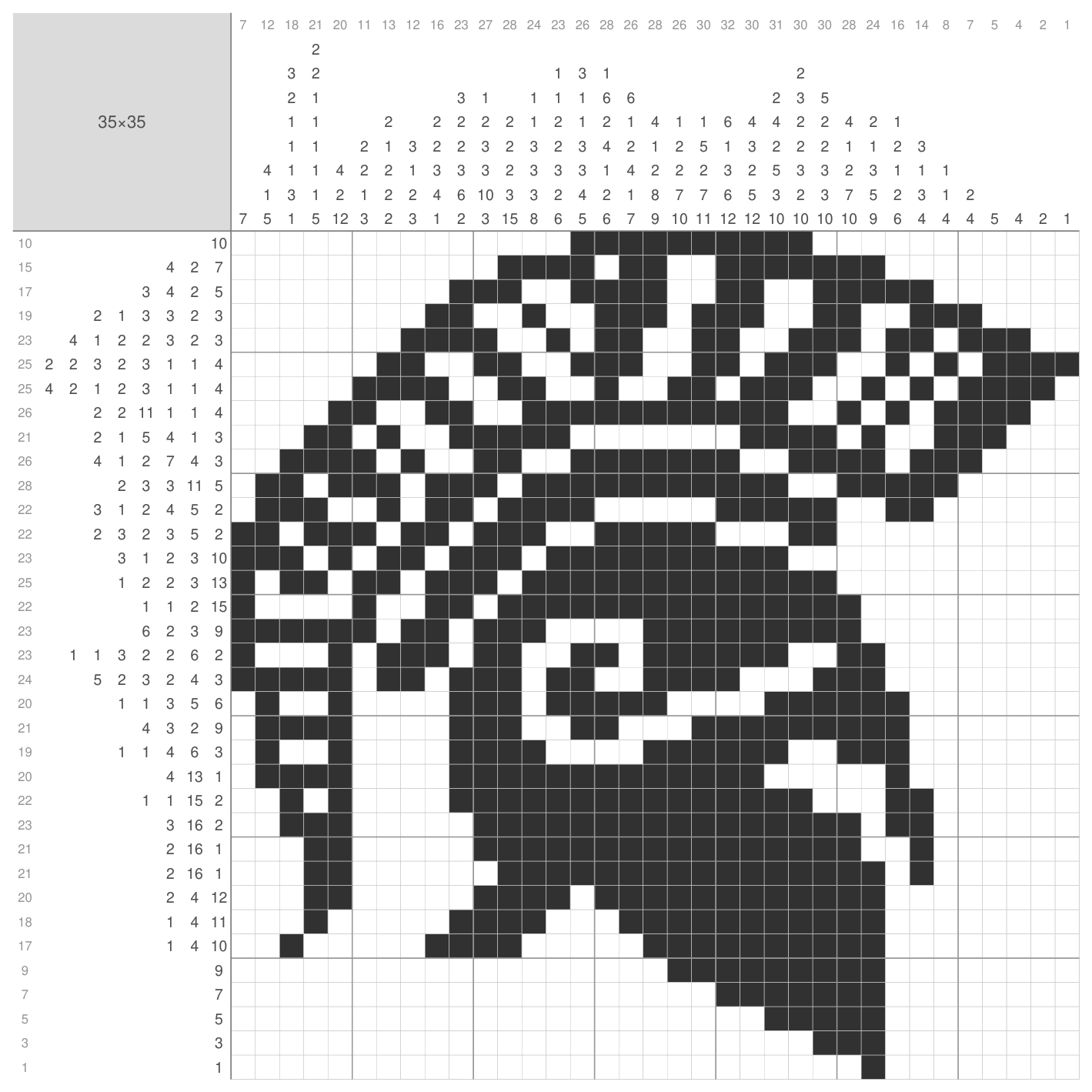
Treat a daily puzzle as one good habit among several, not as insurance. Pick something that makes you work — if it feels effortless, reach for a harder one. Variety helps: crosswords lean on language, while a nonogram leans on pure visual logic and deduction, exercising a different kind of thinking. Ten quiet, focused minutes a day, sustained over years, is the shape of the habit the evidence rewards. If you are new to picture-logic puzzles, our beginner’s guide to solving nonograms is a gentle place to start.
None of this is a promise. It is something better: a small, pleasant, evidence-backed thing you can do most days, that seems to help, and that costs nothing but a little attention. We think that is reason enough to keep a pencil and a puzzle within reach.
Frequently asked
Do puzzles prevent dementia?
No. The evidence suggests puzzles may help delay the onset of accelerated cognitive decline and support people with mild cognitive impairment, but no puzzle prevents dementia. Treat them as one healthy habit alongside exercise, sleep and social connection.
Are crosswords better than brain-training apps?
In a randomized trial from Columbia and Duke, crossword puzzles outperformed cognitive video games for older adults with mild cognitive impairment — on cognitive scores, brain imaging, and daily functioning.
How much puzzling is worth doing?
There is no proven dose, but the pattern in the research is consistency over intensity: a short, genuinely challenging session most days, sustained over years, rather than an occasional marathon.
The research behind this article
Every claim in this article is drawn from published, peer-reviewed research. Here are the primary sources, so you can check them yourself.
- Randomized controlled trial — Columbia & Duke. Devanand D.P. et al., “Computerized Games versus Crosswords Training in Mild Cognitive Impairment,” NEJM Evidence (2022). Read it: the journal paper · plain-language summaries from Columbia and Duke.
- Long-term observational study — Bronx Aging Study. Pillai J.A. et al., “Association of Crossword Puzzle Participation with Memory Decline in Persons Who Develop Dementia,” Journal of the International Neuropsychological Society (2011). Read it: the full paper (open access).
The Logic Atelier publishes the books featured on this site. Some links lead to Amazon, where our titles are sold.

Maximiliano Leyton Gaggioli
Founder, editor and designer of The Logic Atelier. Trained as an architect, he designs the grids, tests every puzzle, draws the pixel art and answers the mail — the atelier is small on purpose.
More about the editorial →
Keep reading
One letter a month. Worth opening.
Every new article, puzzle techniques and atelier notes — straight to your inbox.