
Why a Puzzle Beats the Scroll: What Attention Research Says
The case for puzzles over endless scrolling is real, but almost none of the usual reasons survive checking. What survives is simpler, not about screens.
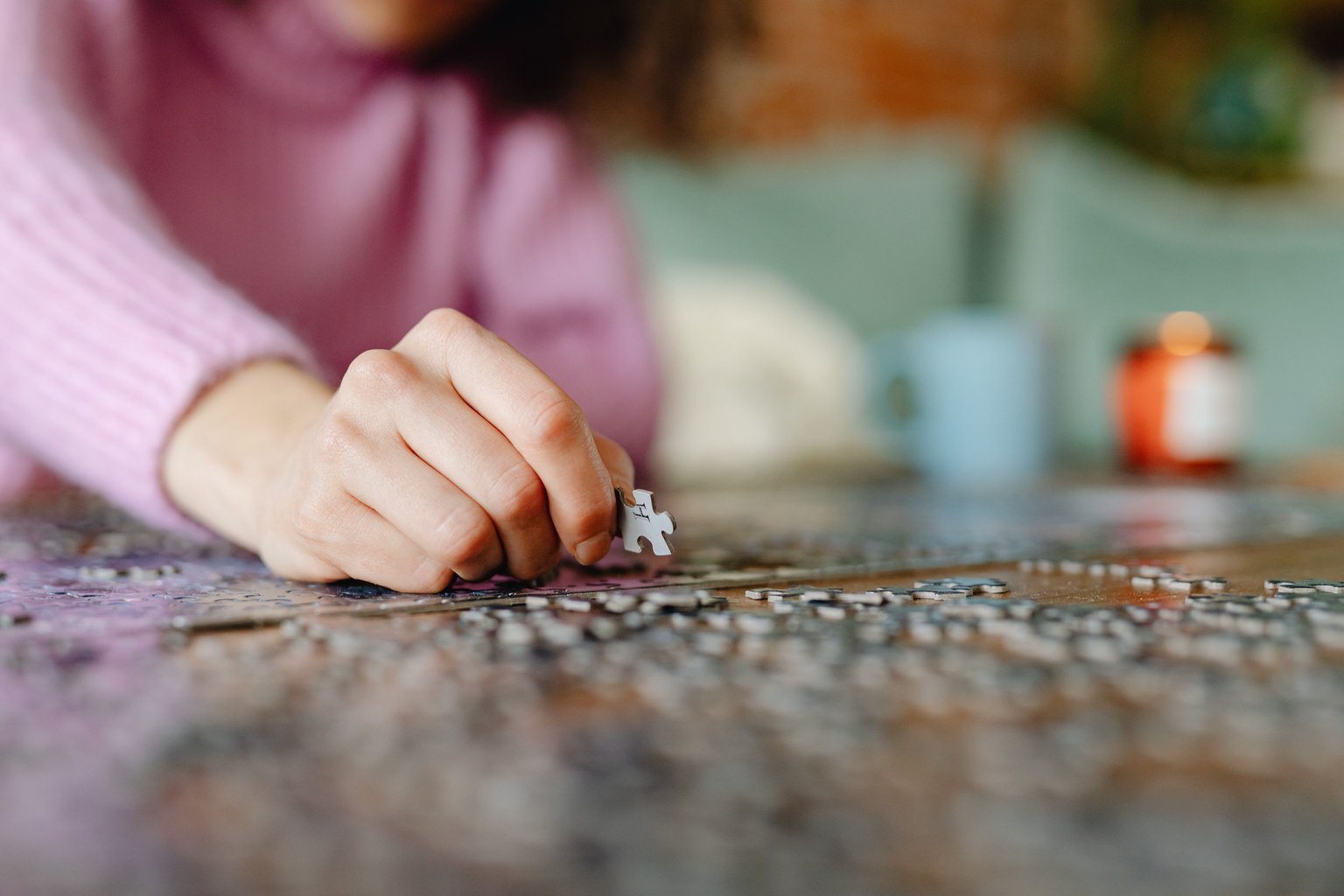
An hour of puzzling ends. An hour of scrolling stops. The difference is not a mood or a moral, and anyone who has spent an evening doing both knows it before they can say why: one of them closes, and leaves something behind that you can point at. The other just runs out of time, and what gets called doomscrolling is mostly that — an hour with no place to put it.
The usual explanation for that difference is neurological, and most of it does not survive checking. The most repeated statistic about human attention was invented. The most shared study about phones failed to replicate. The best-known claim about puzzles and the ageing brain is thinner than the headlines. Yet the difference between the two hours is still there, and there is a decent account of why. It is simpler than the neuroscience, and it has almost nothing to do with screens.
The strongest evidence has nothing to do with paper
The best trial we have on puzzles is a 78-week randomised study from Columbia and Duke, published in NEJM Evidence in 2022. Older adults with mild cognitive impairment were assigned either crossword puzzles or the kind of cognitive training game that markets itself as brain exercise. The crossword group did better — on the main cognitive measure, on brain imaging, and on managing daily life.
Read the method, though, and the interesting part appears. Both arms were delivered on a computer. Web-based crosswords against web-based games. The trial says nothing about paper beating screens, because there was no paper in it. What it compares is two activities on the same glass, and the one that won was the one with a defined problem and a solved state.
That is worth sitting with, because it cuts against the story everyone tells about this subject. The screen was held constant. The structure of the task was not. And the structure is where the difference showed up.
What social media does to attention, and what it doesn’t
Gloria Mark has been timing this at the University of California, Irvine for twenty years, with software that logs how long people stay on one screen before switching to another. In 2004 the average was about two and a half minutes. By 2012 it was 75 seconds. In her more recent work it sits around 47 seconds, with a median near 40, and independent replications land between 44 and 50.
The number gets quoted as proof that attention spans are collapsing, which is not what it measures. It measures switching. It is a fact about how long a screen holds someone before something else does, not about the human capacity to attend — the same person shortening to 40 seconds at a desk can spend three hours on a workbench without noticing.
What makes a social media feed unusual is not that it is engaging. Plenty of things are engaging. It is that it has no edge. A book has pages left. An episode ends. A puzzle is finished or it is not. A feed is built so that the question am I done never has an answer, and without an answer the decision to stop has to come from somewhere else, every time, on will alone.
There is a small, honest piece of psychology here, though not the famous one. The claim that unfinished tasks stay lodged in memory — the Zeigarnik effect — has been picked over for decades and largely fails to replicate; a 2025 meta-analysis of 59 publications found a recall ratio of 0.99, which is to say no advantage at all. What did hold up in the same analysis is its quieter sibling: people show a general tendency to resume a task they were pulled away from. A puzzle is something to return to. A feed is not a task, so there is nothing to return to, and nothing to complete.
Where the medium does matter, and how much
Paper does have a measurable edge, and it is narrower than the phrase “analog is better” suggests. A 2018 meta-analysis pooled 54 studies and more than 170,000 participants comparing reading comprehension on paper against screens. Paper won, at a standardised difference of about a fifth of a standard deviation — real, modest, and consistent enough to take seriously.
Two conditions carry that result. It shows up with expository text, the demanding kind you read to understand rather than to enjoy, and it disappears with narrative; a later meta-analysis found no screen penalty for stories at all. And it grows when readers are working under time pressure. So the honest version is not that screens are worse. It is that screens are worse for hard material read against a clock — which happens to describe most of what people do on them.
What a puzzle will not do for you
This is the part usually left out, and leaving it out is why the genre has a credibility problem.
Thirty days of jigsaw puzzling, an hour a day, produces no cognitive improvement worth the name. That is not a guess: it is a randomised trial of 100 adults over fifty, published in 2018, and the puzzling group did not meaningfully outperform a control group doing other worthwhile things. Lifetime puzzling does correlate with better cognition, but that is a snapshot rather than a clock, and the arrow could point either way.
The study everyone cites about phones has aged worse. The 2017 experiment reporting that a phone face-down on the desk quietly consumes mental capacity was directly replicated in 2022, pre-registered, and did not come out. A 2023 meta-analysis of 22 studies finds the effect survives at about a seventh of a standard deviation overall, concentrated in memory, and not statistically significant for attention — which is the one thing everybody invokes it for.
And the statistic that started the whole conversation, that humans now hold attention for eight seconds and goldfish manage nine, was never a finding. A BBC journalist traced it in 2017 through a 2015 Microsoft Canada report to a data-aggregation site, and from there to nothing: no study, no method, no reply. It had already been printed by Time, The Independent and the New York Times.
So no, puzzles are not medicine. We have looked at the cognitive-decline evidence properly elsewhere, and the summary there stands: a habit worth having, not a treatment.
The verdict, narrowed until it holds
Strip out everything that failed and this is what is left standing, which is less than the wellness version promises and more useful than it. It is not a digital detox argument: nothing here says the screen is the enemy, and the trial at the centre of it was run entirely on screens.
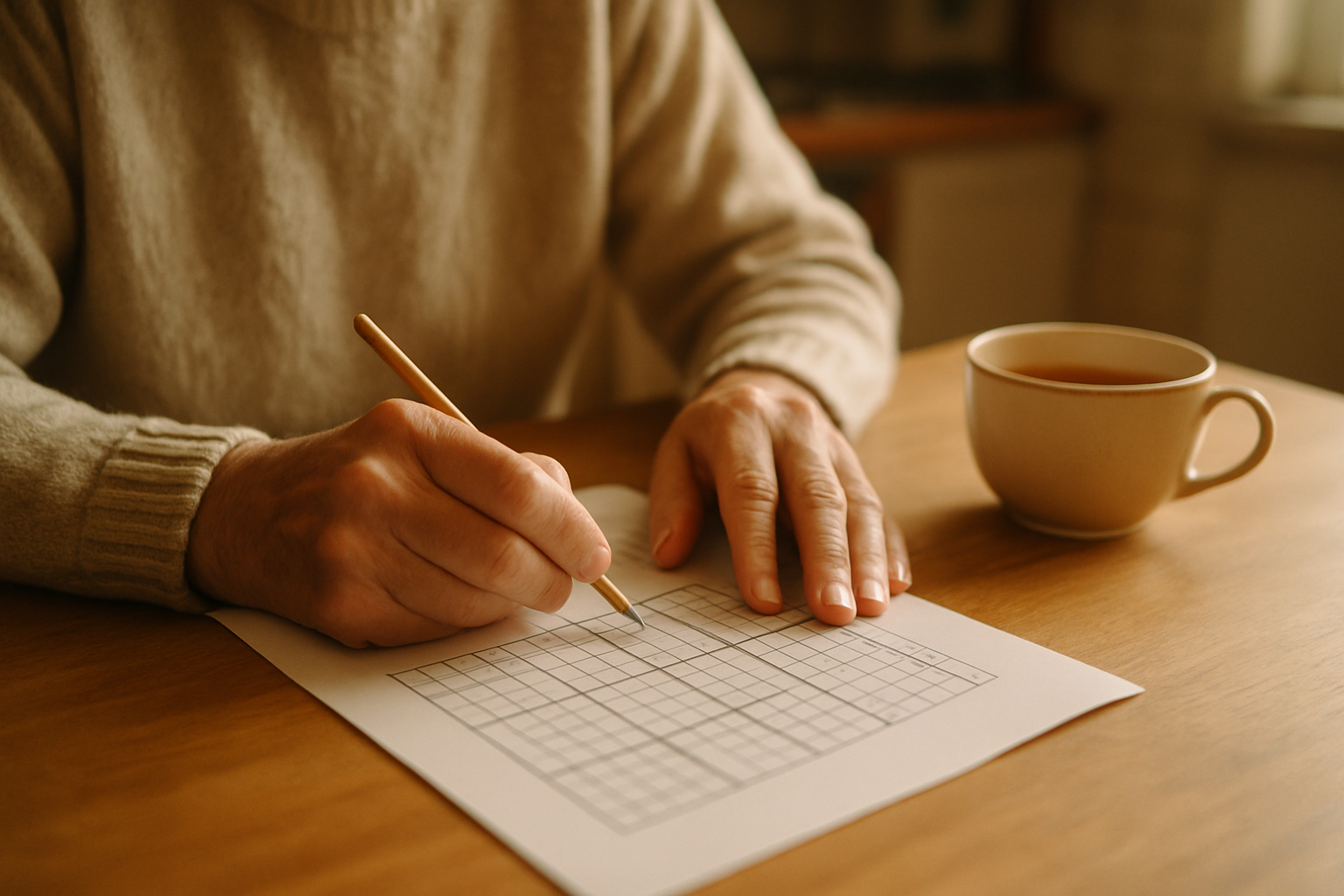
For the thing people are actually reaching for on a weeknight — an hour spent on something that closes — a puzzle beats the scroll reliably, and it has nothing to do with training your brain. It is a property of the object. One has a terminal state and the other is designed not to. You will know which hour you had by whether there is anything to look at when it is over.
How to swap screen time for a puzzle that ends
The practical consequence is narrow and specific, which is the only kind worth giving.
Pick something with an unambiguous finish. Crosswords, sudoku, jigsaws, nonograms and kakuro all qualify; endless-level puzzle apps mostly do not, since a game that always has a next level has borrowed the feed’s architecture. Which family suits you matters less than that it ends.
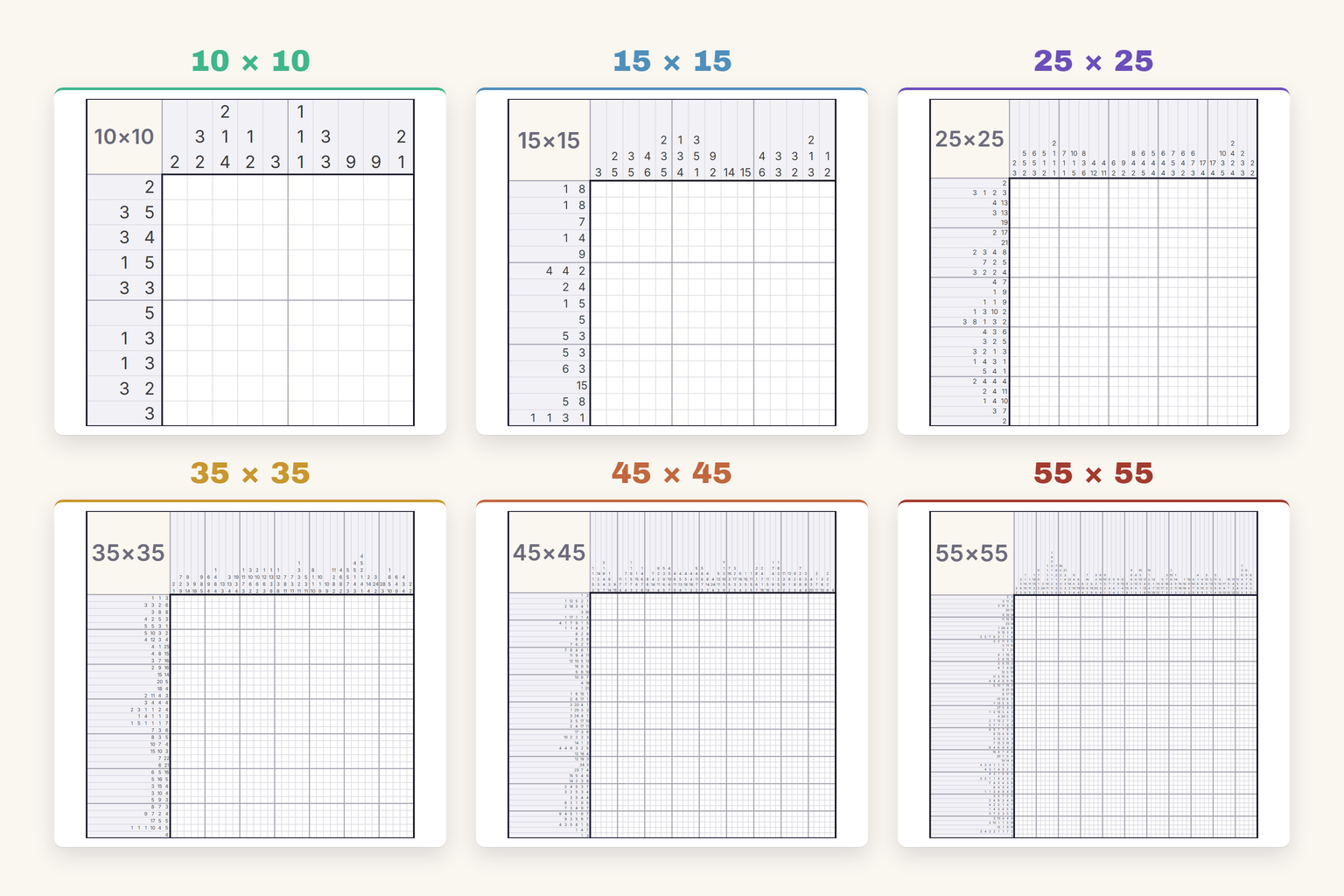
Then size it to the sitting you actually have. A puzzle abandoned halfway is a puzzle restarted, because the state you were holding does not survive the interruption — which is why choosing the right grid size does more for the evening than choosing the right puzzle type. Difficulty should be the largest you can finish without leaving, not the largest you can finish.
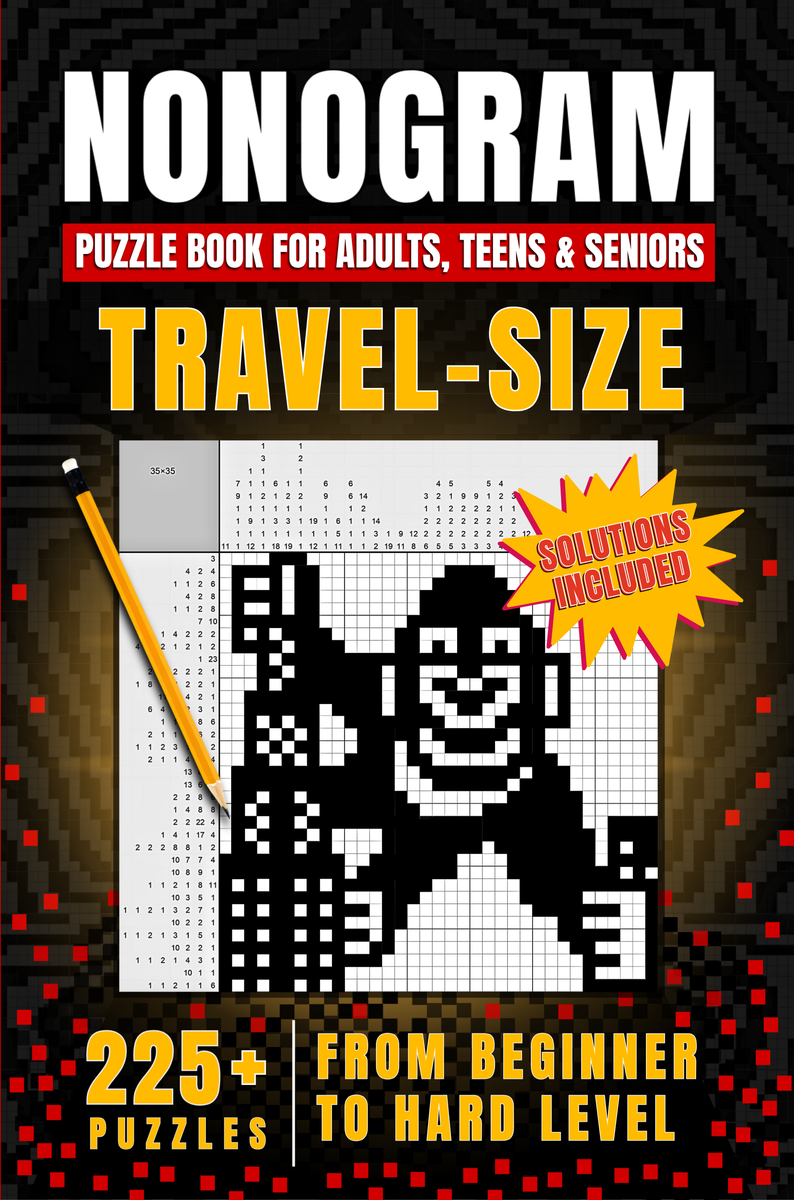
If you want the version of this where the finish line is drawn hardest, that is a nonogram: the picture is either right or it is not, and the puzzle tells you, without a score, a streak or a next level. Our guide starts from a blank grid.
Frequently asked
Is my attention span actually shrinking?
Nobody has measured that, and the famous number claiming it does was fabricated. What has been measured, repeatedly, is how long people stay on one screen before switching: roughly two and a half minutes in 2004 and roughly 47 seconds now. That is a change in switching behaviour in front of a screen. It is not a measurement of what a mind can do.
Does it matter whether the puzzle is on paper or a screen?
Less than the shape of the puzzle does. The trial where a puzzle outperformed a brain-training game had both on a computer. Paper carries a real but modest advantage for demanding text under time pressure; for a puzzle with a defined end, the medium is a preference rather than a mechanism.
Will puzzles improve my focus or my memory?
Not in any way that transfers, on the evidence so far — and the wider literature claiming general cognitive transfer from games has a poor record. We went through the memory question in detail in our piece on whether logic puzzles improve memory, and the answer there is the honest one. What a puzzle reliably gives is an hour with one problem in it, which is worth having on its own terms and does not need to be justified as training.
Are puzzle apps as good as the real thing?
It depends entirely on whether the app ends. One that hands you a puzzle, lets you finish it and stops is the same object on different material. One built on infinite levels, daily streaks and a leaderboard has imported the mechanics this post is about, and the fact that the content is a puzzle does not undo that.
Where this comes from
This subject is full of statistics that fall apart when you follow them back. Here is every source behind the post, including what each one does not support.
- Devanand et al., Computerized Games versus Crosswords Training in Mild Cognitive Impairment (2022) The trial the argument turns on. NEJM Evidence 1(12), DOI 10.1056/EVIDoa2200121. Two sites, single-blinded, 78 weeks, adults with mild cognitive impairment randomised to web-based crossword puzzles or web-based cognitive games; the crossword arm did better on the ADAS-Cog, on hippocampal imaging and on daily functioning. The detail that matters for this post, and that most coverage omits: BOTH arms were delivered on a computer, so the trial cannot support any claim about paper versus screens. It is a comparison of two task structures on identical hardware. Note also the population: people already diagnosed with mild cognitive impairment, not healthy adults, so it does not license conclusions about the general reader. The journal’s own page sits behind a paywall that refuses automated access, so we link the open-access full text instead. Full text (PMC, open access).
- Gloria Mark, twenty years of attention logging (UC Irvine) The source of the 2.5 minutes, 75 seconds and 47 seconds figures. Mark’s group logs computer activity in situ rather than asking people to estimate, which is why the numbers are worth quoting at all; independent replications put the recent figure between 44 and 50 seconds. Two honest caveats. The series is assembled from a research programme and a 2023 trade book rather than from one landmark paper, so it should be read as a consistent body of work, not a single measurement. And the metric is dwell time on a screen before switching, which is not the same thing as attention span, however often the two are equated. Publications, UC Irvine · Interview, American Psychological Association.
- Delgado, Vargas, Ackerman and Salmerón, Don’t throw away your printed books (2018) The paper-versus-screen figure. Educational Research Review 25, pages 23-38: a meta-analysis of 54 studies and more than 170,000 participants, finding a reading-comprehension advantage for paper of about g = -0.21. Two moderators do the real work and are usually dropped in summary: the effect holds for expository text and not for narrative, and it strengthens under time pressure. A later meta-analysis in Media Psychology (2022) found no screen penalty for narrative texts, which is consistent rather than contradictory; that one is paywalled, and we name it without a link rather than send you to a door that will not open. Record and abstract (Technion) · Plain-language summary (TU Munich).
- Fissler et al., Jigsaw Puzzling Taps Multiple Cognitive Abilities (2018) The source for what puzzling does not do. Frontiers in Aging Neuroscience 10:299. One hundred cognitively healthy adults aged 50 and over, randomised to 30 days of home jigsaw puzzling for at least an hour a day plus cognitive health counselling, or to counselling alone. The puzzling group showed no clinically relevant cognitive gain over the control. The paper does report a relationship between lifetime puzzling and cognition, but that part is cross-sectional and cannot separate cause from selection. We cite it because a fair post about puzzles has to include the trial that came out flat. Full text (open access).
- The “brain drain” effect: original, replication and meta-analysis Three sources, because the story only makes sense together. Ward, Duke, Gneezy and Bos reported in 2017 that the mere presence of a smartphone reduces available cognitive capacity (Journal of the Association for Consumer Research 2(2)). Ruiz Pardo and Minda ran a pre-registered direct replication of its second experiment and did not reproduce the effect (Acta Psychologica 230, 2022). Böttger, Poschik and Zierer then pooled 22 studies and 43 effects: a small overall effect of g = -0.14, driven by memory at g = -0.23, with attention and general cognitive performance not reaching significance (Behavioral Sciences 13(9):751, 2023). The effect is not nothing. It is much smaller than its reputation, and weakest precisely where it is invoked most. Ward et al. (2017), author copy · Ruiz Pardo and Minda, replication (2022) · Böttger et al., meta-analysis (2023).
- Ghibellini and Meier, Interruption, recall and resumption (2025) A meta-analysis of 59 publications covering the Zeigarnik effect (better recall of interrupted tasks) and the Ovsiankina effect (the tendency to resume them). The recall advantage does not hold: a weighted recall ratio of 0.99 across 37 studies, which is no advantage. The resumption tendency does. Published in Humanities and Social Sciences Communications. We include it because the Zeigarnik effect is the psychology most often reached for in articles like this one, and it is the half that failed. Full text (open access).
- Simon Maybin, Busting the attention span myth (BBC, 2017) The provenance of the eight-second claim. Maybin traced it from a 2015 Microsoft Canada consumer report to a statistics aggregation site and from there to sources that did not contain it; the site did not respond to his requests. The goldfish half has no basis either. This is journalism rather than a peer-reviewed correction, which is the appropriate form here: the claim was never published as science, so there is nothing to retract, and tracing it is the only available remedy. BBC News.
The Logic Atelier publishes the books featured on this site. Some links lead to Amazon, where our titles are sold.

Maximiliano Leyton Gaggioli
Founder, editor and designer of The Logic Atelier. Trained as an architect, he designs the grids, tests every puzzle, draws the pixel art and answers the mail — the atelier is small on purpose.
More about the editorial →
Keep reading
One letter a month. Worth opening.
Every new article, puzzle techniques and atelier notes — straight to your inbox.